Commercial Video Lighting UK | Professional Film Equipment
Learn how to plan commercial video lighting for product adverts, brand films and corporate shoots. Explore lighting techniques, equipment selection and production planning.
Commercial video lighting UK
Commercial film lighting, advertising production lighting, product video lighting equipment, professional commercial lighting setup, corporate video lighting UK, lighting equipment for advertising shoots, branded content lighting, film lighting for commercials, commercial photography lighting, video production lighting equipment, product advertising lighting techniques, studio lighting for commercials, LED lighting for product videos, professional film lighting hire UK, commercial lighting equipment London, lighting equipment Surrey, production lighting for brands, cinematography equipment for advertising, lighting equipment for marketing videos, professional video lighting solutions.
commercial video lighting UK, commercial film lighting equipment, advertising film production lighting, product video lighting, corporate video production lighting, branded content lighting setup, lighting equipment for advertising agencies, commercial photography lighting equipment, professional lighting for brand films, product advertisement lighting techniques, studio lighting for marketing videos, cinematic commercial lighting, lighting for e-commerce product videos, lighting for luxury product adverts, food commercial lighting equipment, automotive commercial lighting, beauty product video lighting, interview lighting for corporate films, lighting equipment hire for commercials UK, commercial lighting rental London, production lighting Surrey, professional LED lighting for advertising, HMI lighting for commercial shoots, film lighting accessories, lighting modifiers for product photography, diffusion frames for commercial production, reflectors and flags for video production, lighting stands and grip equipment UK, advertising film equipment rental, film production lighting suppliers, Light as Air.
Informational and commercial investigation.
London, Surrey, Walton-on-Thames and the United Kingdom.
Advertising agencies, creative studios, cinematographers, videographers, production managers, filmmakers, marketing teams and independent commercial producers.
commercial-video-lighting-production-uk.jpg
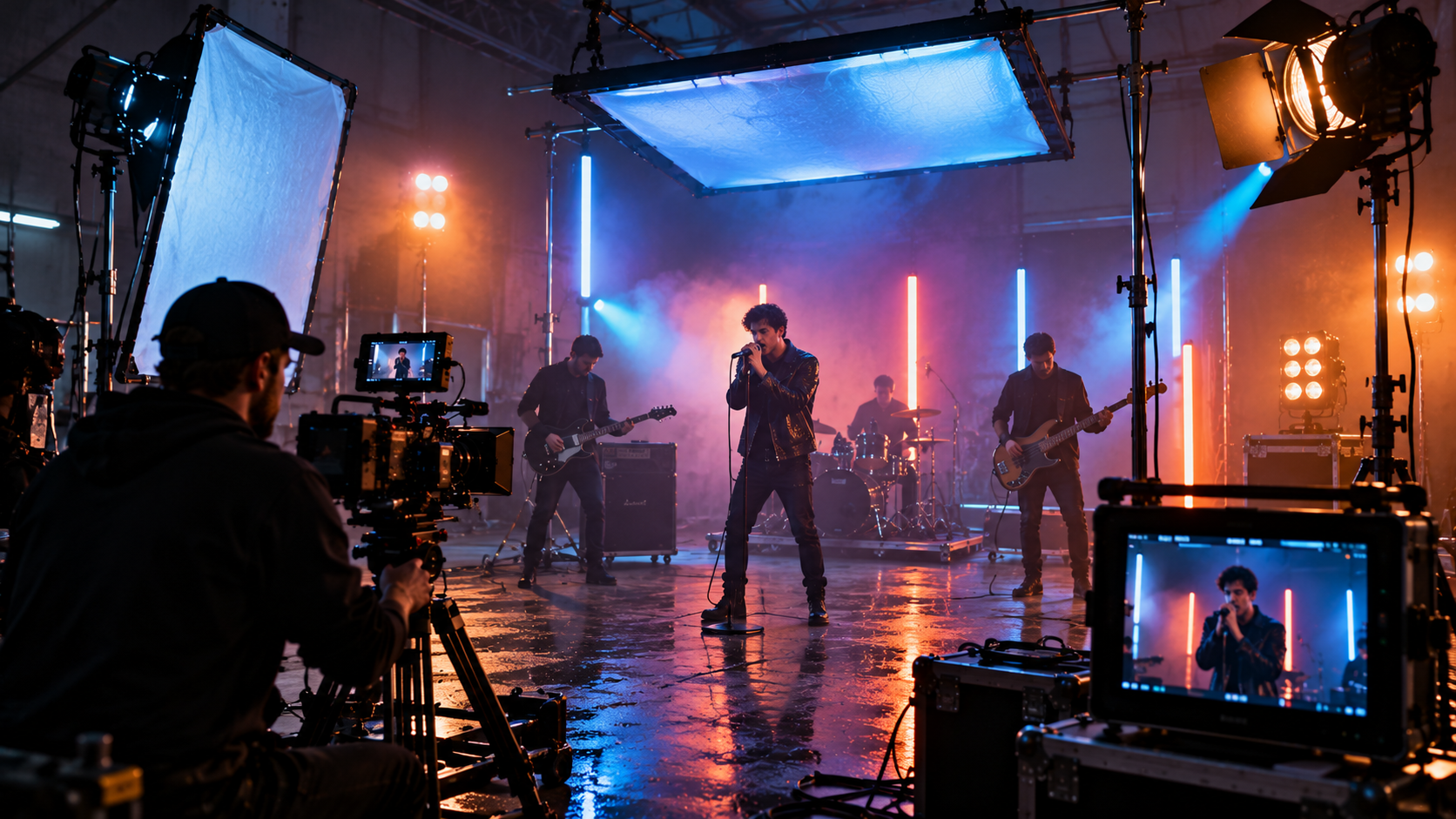
Professional lighting setup for a commercial video shoot with cinema camera, LED fixtures, diffusion and production accessories.
Introduction: Why Lighting Matters in Commercial Video Production
A commercial video has only a limited amount of time to communicate a message, introduce a product and create a memorable impression. Whether the production promotes a new product, showcases a brand, explains a service or tells a company's story, lighting plays an important role in how the audience perceives the final image.
Good lighting can reveal the texture of a product, create an attractive environment, guide the viewer's attention and establish a consistent visual identity. Poorly controlled reflections, distracting shadows or inconsistent colour can make even an expensive product look less appealing on camera.
Commercial lighting is therefore both a creative and a technical discipline. The production team must understand the brand's objectives, the properties of the subject, the intended camera movement and the visual style before choosing equipment.
For businesses and production teams across the UK, selecting suitable fixtures and accessories is an important part of pre-production. The professional lighting equipment available from Light as Air provides a starting point for researching equipment for commercial and film production requirements.
1. Begin With the Brand's Creative Brief
Before selecting lighting equipment, establish what the commercial needs to communicate.
A premium skincare advert, a technology product launch and a corporate recruitment video will usually require different visual treatments. One may emphasise soft highlights and controlled reflections, while another may prioritise a clean, natural appearance.
The director, cinematographer, creative director and client should agree on the intended look before the lighting package is finalised.
Define the Desired Visual Style
The creative brief should identify whether the commercial needs to look natural, dramatic, luxurious, energetic, minimal or documentary-inspired.
Reference images and short visual treatments can help communicate the desired contrast, colour, background and subject placement.
Identify the Important Product Details
Different products respond differently to light. Glass can produce distracting reflections, metal can create strong highlights, and fabric may need carefully controlled directional illumination to reveal its texture.
The lighting team should identify the features that must remain visible throughout the shoot.
Plan for the Final Format
A commercial intended for a wide-screen website video may require a different composition from one designed primarily for vertical social media.
Lighting placement, background coverage and the distance between the subject and the background should be considered alongside the camera framing.
2. Product Lighting: Making the Subject Look Its Best
Product lighting requires precision because the viewer's attention is concentrated on a relatively small area of the frame.
A product may need to appear glossy, soft, metallic, transparent, textured or completely natural. The objective is to reveal its design and important details without introducing distracting highlights or unwanted shadows.
Lighting Reflective Products
Glass bottles, watches, polished metal and glossy packaging can reflect the surrounding environment.
Large diffusion surfaces can provide controlled reflections, while flags and black surfaces can help define edges and reduce unwanted reflections. The correct approach depends on the product's shape, finish and camera angle.
The team should assess the complete reflection environment rather than treating the light source as the only factor affecting the image.
Lighting Textured Products
Clothing, leather, food packaging and textured materials may benefit from directional light that reveals their surface detail.
A broad, frontal source can reduce shadows but may also flatten the appearance. A more directional source can create additional depth, although excessive contrast may hide important features.
The final balance depends on the product, the brand's visual identity and the intended camera exposure.
Lighting Small Products and Close-Ups
Close-up shots can reveal details that are not visible in a wider frame. They may also expose small imperfections, dust, uneven highlights and reflections.
Allow time to test the lighting with the actual product and camera. Small adjustments to the angle, diffusion or flags can produce a substantial visual difference.
Production teams can research suitable fixtures through the lighting equipment categories before building a product-specific equipment list.
3. LED Lighting for Commercial Production
LED fixtures are widely used for commercial videos because many models offer adjustable output, colour temperature and other control options.
Depending on the fixture, they can support interviews, product demonstrations, studio scenes and location-based advertising.
Benefits of LED Fixtures
LED equipment is available in a variety of sizes and output levels. Compact models can suit smaller studios, while more powerful fixtures can be useful for larger scenes.
Some units offer colour effects, wireless control or battery-compatible operation. These capabilities can help the crew adapt the lighting to different creative requirements.
However, not every LED fixture offers the same output, colour accuracy or control features. Specifications should be checked before selecting a package.
Choosing the Right LED Setup
Consider the subject size, working distance, desired softness, available space and the required frame rate or camera settings.
Check the manufacturer's photometric information and colour specifications rather than judging the fixture solely by its wattage.
For multi-camera shoots or product sequences, also consider how easily the fixtures can be matched and adjusted between shots.
4. Creating a Premium Look With Diffusion and Light Control
Professional-looking commercials often depend on how light is shaped rather than simply how much light is available.
Diffusion, reflectors, flags and suitable modifiers allow the lighting team to control the quality and direction of illumination.
Diffusion for Softer Highlights
Diffusion can make a source appear larger and soften shadows when positioned appropriately.
It is useful for many beauty, lifestyle and product shoots, but it also reduces the amount of light reaching the subject. The fixture's output and the frame's exposure requirements must be considered.
Flags for Precision
Flags help control unwanted spill and reflections. Black surfaces can create darker reflected areas on glossy products, while other materials can block or redirect light.
The placement of flags should be tested through the camera because a small change in position can alter the product's appearance.
Reflectors for Additional Control
Reflectors can redirect existing light into shadow areas without adding another powered fixture.
They may be useful for small commercial sets where space, power or setup time is limited.
The grip and lighting accessories available through Light as Air's category listings can help production teams identify the types of equipment they may need. Confirm specific product availability before booking.
5. Lighting Corporate Videos and Brand Interviews
Corporate videos often need to communicate professionalism, trust and clarity. The lighting should support the speaker while fitting naturally into the environment.
A common approach uses a key light to shape the face, controlled fill to manage shadows and background illumination to create depth.
However, a corporate interview does not always need a conventional three-light arrangement. The best setup depends on the location, available natural light, background and desired style.
Match the Lighting to the Environment
An interview in an office may benefit from a natural-looking window source, while a controlled studio interview may require more deliberate background separation.
Keep reflections on glasses, computer screens and polished furniture under control. Consider the appearance of the background at the intended camera exposure.
Maintain Consistency Across Interviews
For a series of interviews, document fixture positions, colour settings, camera exposure and relevant accessories.
This makes it easier to reproduce the visual style when filming different people on different days.
For projects with specialist equipment requirements, production teams can explore the professional lighting rental catalogue and confirm the equipment available for their shoot dates.
6. Lighting Food, Lifestyle and Hospitality Commercials
Food and lifestyle advertising often relies on an inviting atmosphere, appealing textures and a believable environment.
Food can lose its visual appeal under poorly controlled lighting. Reflections on sauces, harsh shadows, colour casts and excessive contrast may affect the final image.
A food commercial may use a directional source to reveal texture, with fill or bounce to control shadows. Backlighting or side lighting can help emphasise steam, transparency or surface detail when appropriate.
Lifestyle commercials require additional attention to continuity. The position of the light, practical sources and background elements should remain consistent as the camera changes angle.
The lighting team should work with the director and production designer to ensure that the final image supports the story and brand rather than making the environment feel artificial.
7. Planning Equipment, Time and Budget
Commercial shoots frequently operate within fixed schedules. Equipment selection should therefore consider not only the creative result but also setup time, transport, available space and crew requirements.
Prepare a lighting list based on the shot list and visual references.
Separate essential equipment from optional items, then confirm the accessories, power arrangements and support equipment required for each setup.
Before confirming a rental, clarify the hire duration, collection or delivery arrangements, included accessories, return deadlines and any additional terms.
For frequently used equipment, compare hiring with purchasing. The new and used lighting equipment for sale can be reviewed alongside rental options when planning longer-term production needs.
8. Working With a Professional Lighting Supplier
A clear equipment enquiry helps a supplier understand what a commercial production requires.
Include the shoot dates, location, production type, intended lighting style, equipment list and any restrictions on space or power.
For product work, explain the size and surface characteristics of the subject. For interviews, identify the location and number of setups. For larger commercial productions, include relevant details about the shooting schedule and required accessories.
Light as Air provides an online catalogue for professional lighting equipment sales and rental. Its about page provides additional information about the company and its film and television lighting services.
Confirm equipment availability, current specifications, delivery arrangements and all relevant terms directly with the supplier.
9. A Commercial Lighting Checklist
Before filming, confirm that:
- The creative brief and visual references have been approved.
- Product surfaces, colours and reflections have been assessed.
- The camera framing and final video format are known.
- The lighting fixtures and accessories match the shot list.
- Diffusion, flags and reflectors are included where required.
- Power requirements and cable routes have been checked.
- The background and practical lights have been considered.
- Equipment collection or delivery and return arrangements are confirmed.
- The crew has enough time to test the setup before recording.
A short lighting test can reveal problems before the main shoot begins.
Frequently Asked Questions
What lighting equipment is best for commercial video production?
The best equipment depends on the subject, visual style, location and camera setup. LED fixtures, diffusion, reflectors and light-control accessories are useful options for many commercial productions, but the package should be selected for the specific brief.
How do you light a product for an advertisement?
Begin by assessing the product's shape, surface and important details. Position the light to create the desired highlights, then use diffusion, flags and reflectors to manage reflections and shadows.
Why is diffusion important in commercial lighting?
Diffusion can soften light and reduce harsh shadow transitions. It also affects light output, so the fixture and exposure should be adjusted accordingly.
Can LED lights be used for corporate videos?
Yes. Suitable LED fixtures can support interviews, presentations and corporate filming. Check output, colour accuracy, control options and the space available before selecting the equipment.
Should a production hire or buy commercial lighting equipment?
Hiring can suit individual projects and specialist requirements. Buying may be practical for equipment used regularly. Compare the full costs, including accessories, maintenance, storage and transport.
Where can UK production teams find professional lighting equipment?
Production teams can explore specialist suppliers such as Light as Air, which lists lighting equipment for sale and rental. Confirm current stock, specifications and terms directly with the supplier.
Conclusion
Commercial video lighting combines visual storytelling with precise technical control. From reflective product shots to corporate interviews and lifestyle advertising, the lighting should reinforce the brand's message while presenting the subject clearly and consistently.
By developing a creative brief, testing the subject, selecting appropriate fixtures and preparing the necessary accessories, production teams can build a more effective lighting workflow.
Explore Light as Air to research professional lighting equipment sales and rental options for commercial, film and television productions across the UK.
This article provides direct answers to common questions about commercial lighting, product presentation, diffusion, interviews and equipment selection.
- Keep the FAQs as clear, descriptive headings.
- Place a direct answer immediately after each question.
- Use accurate equipment terminology.
- Link relevant recommendations to the appropriate catalogue pages.
- Keep product and company information up to date.
- Target UK commercial production and advertising audiences naturally.
- Use verified business details and location information.
- Explain the business's relevance to film and television lighting.
- Link to useful rental, sales and category pages.
- Publish original and practical guidance for production teams.
- Seek credible editorial references from relevant creative-industry websites.