Cinematography Lighting Techniques | Film Lighting UK
Discover professional cinematography lighting techniques, from three-point lighting and soft light to dramatic shadows, practical lighting and creative film setups.
Cinematography lighting techniques
Cinematography lighting equipment UK, professional film lighting techniques, film lighting setups, three-point lighting for film, cinematic lighting techniques, lighting techniques for filmmakers, professional cinematography equipment, film set lighting, dramatic lighting for cinema, soft lighting for interviews, hard light vs soft light, film lighting accessories UK, gaffer lighting techniques, creative lighting for commercials, lighting equipment for cinematographers, film lighting hire UK, cinema lighting equipment, lighting techniques for music videos, production lighting solutions, professional lighting for television.
Cinematography lighting techniques, professional cinematography lighting, film lighting techniques UK, cinematic lighting setups, three-point lighting techniques, key light fill light backlight, practical lighting for film, motivated lighting techniques, high-key lighting for film, low-key lighting cinematography, hard lighting for cinema, soft lighting for filmmaking, lighting ratios cinematography, colour contrast film lighting, dramatic shadows film production, portrait lighting for interviews, commercial film lighting, lighting for music videos, film lighting equipment suppliers UK, professional LED film lighting, HMI lighting for cinematography, tungsten lighting techniques, lighting stands and grip equipment, cinema lighting modifiers, diffusion frames for film, flags and reflectors for cinematography, gaffer equipment UK, cinematography equipment rental London, film lighting supplier Surrey, film lighting equipment Walton-on-Thames, Light as Air.
Informational and commercial investigation.
United Kingdom, London, Surrey and Walton-on-Thames.
Cinematographers, directors, gaffers, camera operators, production companies, film students and independent filmmakers.
cinematography-lighting-techniques-film-set-uk.jpg
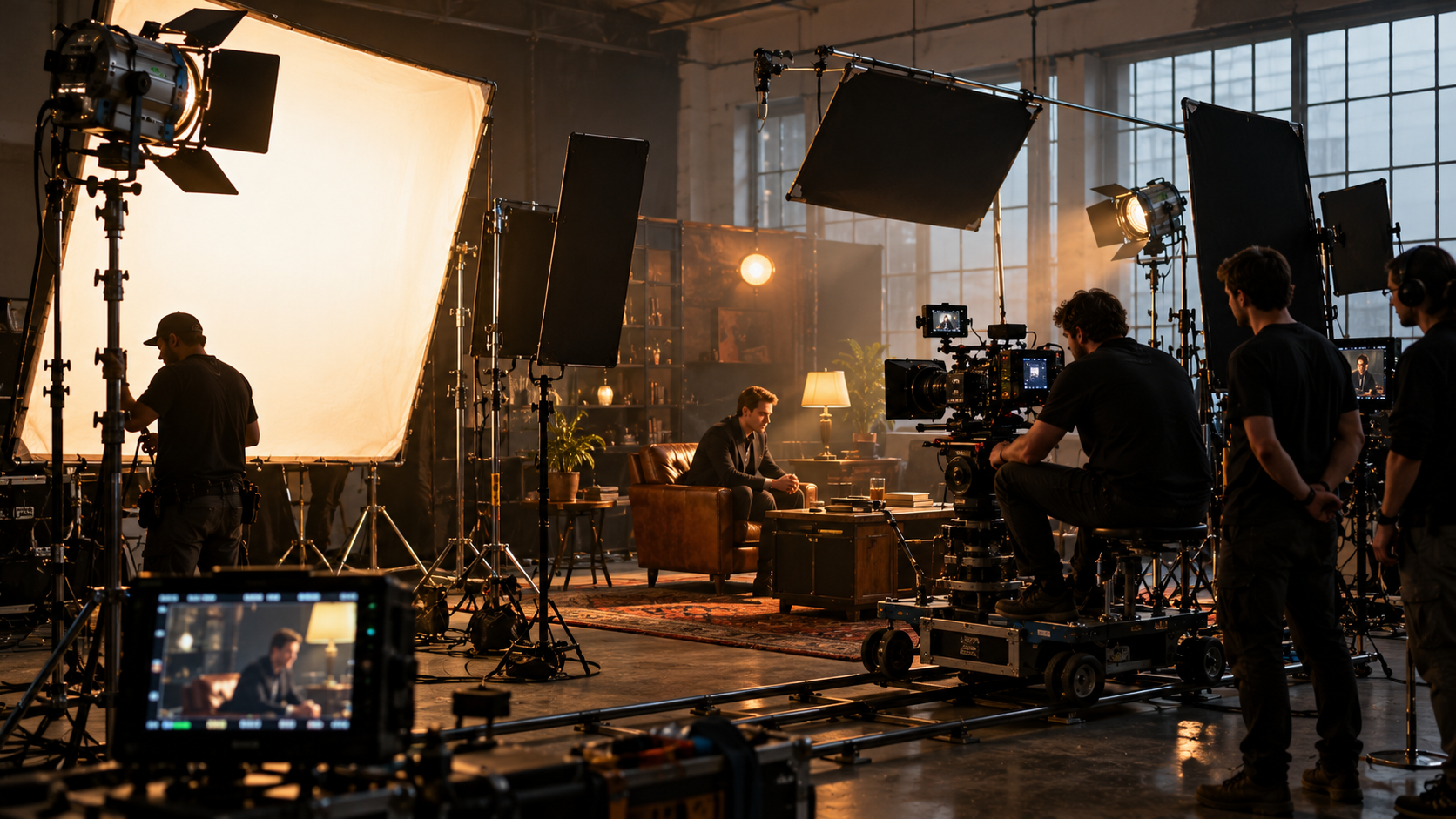
Professional film lighting setup with LED fixtures, diffusion frames, reflectors and cinema production equipment.
Introduction: Why Lighting Is Central to Cinematography
Cinematography is about more than recording a scene with a camera. It involves controlling composition, movement, exposure, colour and light to communicate a story visually.
Lighting can make a location feel welcoming, mysterious, tense, romantic or unsettling. The same actor standing in the same room can appear entirely different depending on the direction, intensity, colour and softness of the light.
For cinematographers, understanding lighting techniques is essential to creating a consistent visual language. It also helps production teams communicate their creative intentions and choose suitable equipment before filming begins.
Professional lighting is not necessarily about using the largest fixtures or the greatest number of lights. A carefully positioned source, appropriate diffusion and controlled shadows can sometimes produce a more effective result than a complicated setup.
Filmmakers developing their equipment plans can explore the professional lighting equipment available from Light as Air while considering which fixtures and accessories suit their creative requirements.
1. Three-Point Lighting: A Foundation for Filmmakers
Three-point lighting is a widely taught technique that uses a key light, a fill light and a backlight or rim light. It provides a useful starting point for interviews, dialogue scenes, portraits and many controlled production environments.
Key Light
The key light is the principal source shaping the subject. Its position determines where the strongest illumination and shadows appear.
Placing the key light to one side of the camera can create depth and dimension. Moving it closer to the camera axis may produce a more even appearance, depending on the source and the subject.
The correct position depends on the intended look, the actor's movement, the camera angle and the background.
Fill Light
The fill light controls the darkness of shadows created by the key light.
A stronger fill can produce a more even, accessible image, while a weaker fill preserves greater contrast. In some setups, a reflector or a nearby surface can provide enough reflected light without introducing another powered fixture.
Fill should be adjusted according to the scene rather than applied automatically.
Backlight or Rim Light
A backlight illuminates the subject from behind or from an elevated rear position. Depending on the angle, it can create separation between the subject and the background.
It can also emphasise hair, clothing or the outline of an object.
Careful positioning is important because excessive backlight can create unwanted glare or distracting highlights in the camera frame.
When Should You Use Three-Point Lighting?
This approach is useful for interviews, corporate videos, controlled dialogue scenes and portrait-style filming. However, it is a technique rather than a compulsory formula. Many cinematic scenes use fewer sources or deliberately avoid visible separation lighting.
2. Hard Light vs Soft Light: Controlling Shadows and Texture
The apparent hardness or softness of light has a major effect on how a scene looks.
Hard light produces relatively defined shadows and can emphasise texture. Soft light produces more gradual transitions between illuminated and shadowed areas.
The result depends on the apparent size of the source relative to the subject, its distance and the presence of diffusion or reflected light.
Creating Hard Light
A relatively small source positioned at a suitable distance can produce distinct shadows and strong directional contrast.
Hard light can work well for dramatic scenes, harsh sunlight effects, stylised commercials and situations where the director wants to emphasise shape or texture.
Flags and other light-control accessories can help prevent unwanted illumination from spreading across the scene.
Creating Soft Light
Soft light is often useful for interviews, close-ups, beauty content and naturalistic interiors.
A larger apparent source, diffusion frame or bounced light can spread illumination over a wider area and soften shadows.
However, diffusion absorbs some light, and a large frame requires sufficient space and safe support. The crew must consider the output of the fixture, the distance to the subject and the practical limitations of the location.
Production teams can explore lighting equipment categories when identifying fixtures and accessories for different lighting styles.
3. High-Key Lighting: Creating a Bright, Clean Image
High-key lighting generally uses relatively even illumination and reduced contrast, although the exact approach varies by production.
It is frequently associated with corporate videos, product demonstrations, selected comedy scenes, lifestyle commercials and clean studio presentations.
The objective is not simply to make everything bright. The lighting must still preserve the subject's shape, skin detail and separation from the background.
How to Plan a High-Key Setup
Start by assessing the background and the available space. A bright background may require separate illumination to prevent it from appearing grey or uneven.
Next, establish the key light and determine how much fill is needed. Additional fixtures or reflectors can help control the background and reduce unwanted shadows.
Monitor exposure carefully so that highlights retain the detail required by the final image.
High-key lighting can require more fixtures and space than a minimal setup, but the precise equipment package depends on the size of the scene and the intended result.
4. Low-Key Lighting: Building Drama Through Contrast
Low-key lighting uses controlled illumination and substantial shadow to create atmosphere, depth or tension.
It can be effective in thrillers, crime dramas, suspense sequences, music videos and character-driven scenes.
The technique does not necessarily mean that the entire image must be dark. Instead, the cinematographer chooses where the viewer's attention should go and controls how much information remains visible in the shadows.
Techniques for Low-Key Scenes
Use a directional key light to establish the subject's shape. Limit unwanted fill when deeper shadows are required, and consider flags or negative fill to reduce reflected light.
Background illumination can be kept selective to reveal only the details that support the composition.
Practical light sources, such as lamps visible in the frame, can provide visual motivation for the lighting design.
When using a low-key setup, test the image with the intended camera settings. A lighting arrangement that looks dramatic to the eye may render differently on camera.
5. Motivated Lighting: Making Light Feel Natural
Motivated lighting refers to a setup designed to feel as though it comes from a plausible source within the scene.
That source might be a window, a desk lamp, a streetlight or a television screen. The actual production lighting may be positioned outside the frame or at an angle that creates the intended appearance.
The aim is to support the scene's visual logic without making the lighting equipment itself noticeable.
Window-Motivated Lighting
For a daytime interior, the cinematographer may use a window as the apparent source of illumination. Diffusion, reflectors or artificial lighting can help shape the light falling on the actor.
The setup should account for changes in daylight and the direction of the sun, especially when multiple shots must match.
Practical-Motivated Lighting
A practical is a light source visible in the scene, such as a lamp on a table.
The practical contributes to the composition, but it may not provide sufficient illumination for the entire shot. Additional fixtures can be placed to support the practical's appearance while maintaining suitable exposure.
The key is to make the combined result believable and consistent.
6. Colour Contrast: Using Warm and Cool Light Creatively
Colour can guide attention, establish atmosphere and distinguish different parts of a frame.
A cinematographer might combine warm interior lighting with cooler window light, or use contrasting colours in a music video to establish a particular visual identity.
The technique requires attention to colour temperature, fixture capabilities, camera white balance and the interaction between different sources.
LED fixtures with suitable colour-control functions can be useful for creating selected colour effects. Other sources may be appropriate where their output and colour characteristics match the creative requirements.
Do not introduce colour simply for decoration. The lighting should support the location, characters, story and visual style.
7. Lighting Equipment and Accessories That Shape the Image
A complete lighting approach involves more than choosing a fixture. Modifiers and supporting equipment determine how the light reaches the subject.
Common items include:
- Diffusion frames and textiles to soften illumination.
- Reflectors to redirect available light.
- Flags to control spill and shape shadows.
- Stands and clamps to position equipment appropriately.
- Compatible lenses, reflectors or optical accessories for selected fixtures.
- Cables and suitable power distribution equipment.
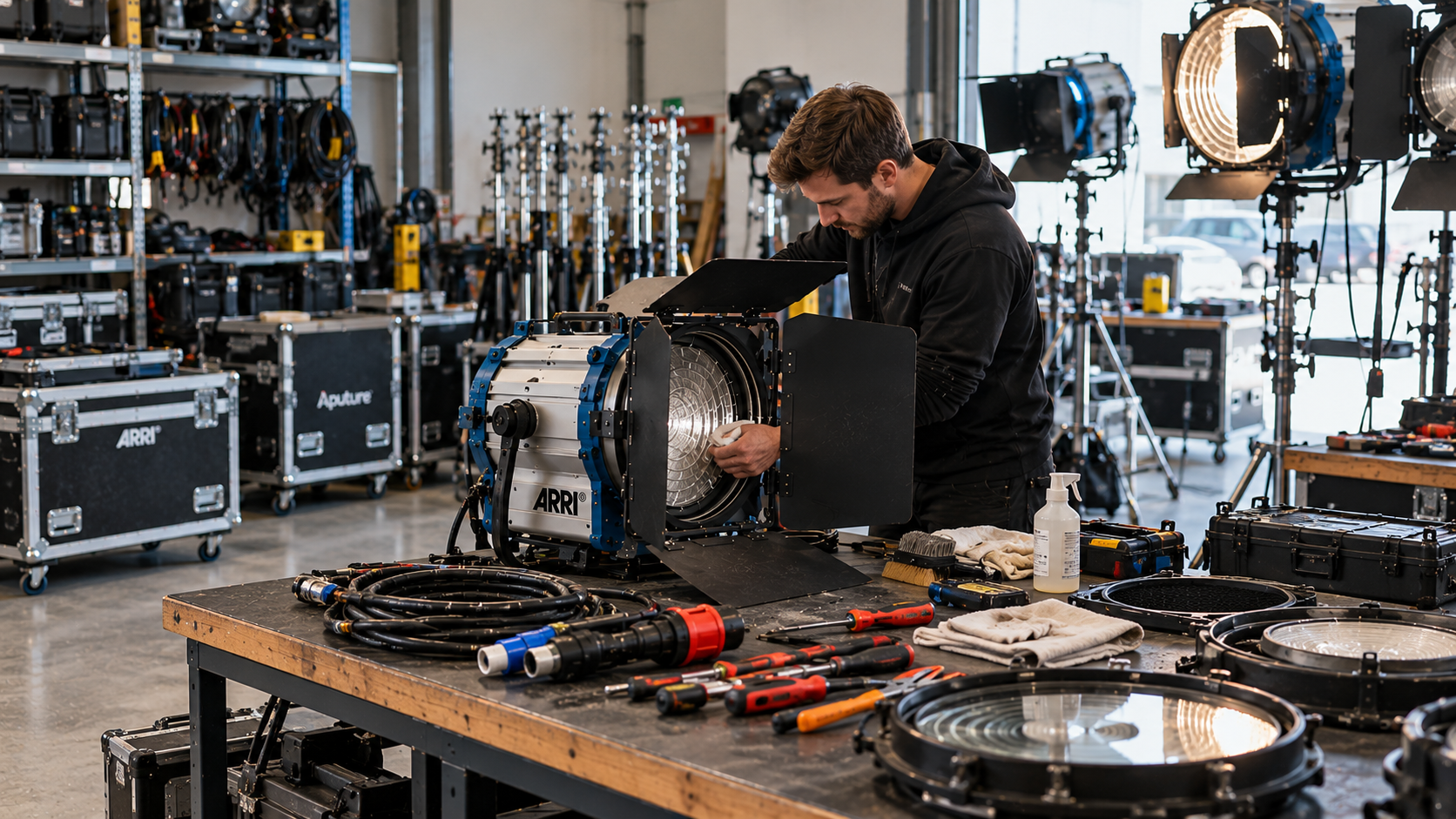
Every accessory should be selected according to the fixture, the setup and the manufacturer's instructions. Equipment used overhead requires suitable rigging, load assessment and safe installation.
Explore the lighting and grip equipment categories when preparing a practical equipment list.
8. Planning Lighting for Different Production Types
Different productions need different approaches to lighting.
Interviews and Corporate Films
Interviews often benefit from a controlled key light, carefully managed fill and a background that adds depth without distracting the viewer.
Compact LED fixtures and diffusion can be useful where space and setup time are limited.
Commercial Productions
Commercials may require precise control over reflections, product texture, colour and highlight placement. Product lighting should be planned around the material, shape and movement of the subject.
Music Videos
Music videos may combine hard light, colour effects, backlighting, haze and dramatic contrast. The setup should reflect the intended visual style and the practical demands of the location.
Narrative Films
Narrative productions often require continuity between shots and a lighting design that supports the story. Motivated sources, controlled contrast and carefully documented setups can help achieve consistency.
9. Hire or Buy Equipment for Your Cinematography Work?
The choice between hiring and buying depends on how frequently the equipment will be used and the requirements of the production.
Hiring can provide access to specialist fixtures for a particular shoot. Buying may be more practical for equipment used repeatedly across many projects.
Compare the complete cost, including accessories, transport, maintenance, storage and the expected number of days the equipment will be used.
If you are evaluating equipment for an upcoming shoot, compare the lighting equipment rental catalogue with the new and used lighting equipment for sale.
Confirm the availability, specifications and applicable terms directly with the supplier before making a booking or purchase.
10. Why Preparation Matters Before the Camera Rolls
A lighting plan can save valuable time during production.
Before filming, establish the intended visual style, identify the main sources, check the location and prepare the equipment list. Confirm which accessories are required and whether the available power supports the planned setup.
Where continuity matters, record fixture positions, modifier choices, relevant settings and camera angles. Reference photographs can help the crew recreate a setup later.
Finally, make sure the lighting arrangement can be installed, operated and adjusted safely. Stands, cables, electrical equipment and overhead fixtures must be managed by appropriately competent personnel.
For equipment research and enquiries, visit the official Light as Air website.
Frequently Asked Questions
What are the main cinematography lighting techniques?
Common techniques include three-point lighting, hard and soft lighting, high-key lighting, low-key lighting and motivated lighting. The best approach depends on the story, location and intended visual style.
What is the difference between hard light and soft light?
Hard light generally produces more defined shadows, while soft light creates gentler transitions between light and shadow. Source size relative to the subject, distance and diffusion all influence the result.
What is three-point lighting used for?
Three-point lighting uses a key light, fill light and backlight or rim light to shape a subject. It is commonly used for interviews, portraits and controlled dialogue scenes.
How do filmmakers create dramatic shadows?
Filmmakers can use directional light, controlled fill, flags and negative fill to shape shadows. The precise arrangement depends on the desired contrast and the camera framing.
What is motivated lighting in film?
Motivated lighting is designed to appear consistent with a plausible source in the scene, such as a window, lamp or streetlight. Production fixtures may be used to create or reinforce that appearance.
Which equipment is useful for professional cinematography?
Equipment may include LED, HMI or tungsten fixtures, stands, diffusion, flags, reflectors and compatible power accessories. The correct package depends on the production requirements.
Should filmmakers hire or buy lighting equipment?
Hiring is useful for occasional or specialist requirements, while buying can suit equipment used regularly. Compare expected utilisation, maintenance, transport and total ownership costs.
Conclusion
Professional cinematography lighting combines creative decisions with technical planning. Understanding source direction, contrast, colour, diffusion and lighting control allows filmmakers to build images that support the story.
The most effective setup is not always the largest or most complicated. It is the one that produces the intended visual result while remaining practical for the location, crew and schedule.
Explore Light as Air to research lighting equipment rental and sales options for film, television and commercial productions in the UK.
This article answers specific questions about lighting methods, equipment choices and practical filming applications.
For improved answer-engine clarity:
- Keep each FAQ as a descriptive heading.
- Place a direct answer immediately after each question.
- Use accurate cinematography terminology.
- Link equipment recommendations to relevant category pages.
- Keep the article updated when linked product information changes.
To support generative search visibility:
- Identify the intended audience as UK film and television professionals.
- Include relevant geographic information naturally.
- Use consistent, verified business details.
- Link to useful equipment and service pages.
- Publish original, helpful content rather than repetitive keyword variations.
- Seek credible editorial references from relevant production-industry websites.
These measures support discoverability but do not guarantee AI search citations.
Article and BreadcrumbList. Use verified Organization or LocalBusiness information where appropriate.
Film production lighting setup with professional fixtures, diffusion frames and grip accessories.