Night Shoot Lighting for Film Productions UK | Light as Air
Learn how to light night scenes for UK film productions, control shadows, create realistic street lighting and plan professional lighting equipment for night shoots.
night shoot lighting UK, film night lighting techniques, night filming equipment UK, lighting for night scenes, cinematic night lighting, film lighting equipment hire UK, night exterior lighting, night interior lighting, realistic night scenes, cinematography night lighting, low light film production, street lighting for films, film lighting rental London, HMI lighting equipment UK, LED lighting for night shoots, tungsten film lighting, lighting for night-time cinematography, film production equipment hire, night scene exposure, moonlight effect filmmaking, blue night lighting techniques, practical lighting for films, film lighting stands and grip, location lighting UK, film crew lighting equipment, night filming power solutions, lighting equipment for television production, film lighting accessories, day-for-night filmmaking, lighting for urban night scenes, professional film lighting supplier UK, Light as Air lighting equipment.
Introduction: Why Night Lighting Requires Careful Planning
Night scenes can create some of the most memorable images in cinema. A quiet street, a character standing beneath a streetlamp, a dimly lit room or a car travelling through the city can establish tension, mystery, romance or isolation without relying on dialogue.
However, filming at night presents practical and creative challenges. Available light may be insufficient for the camera, backgrounds can disappear into darkness, unwanted colour differences may appear between sources, and outdoor locations may have limited access to electrical power.
Professional night cinematography is not simply about making a scene brighter. It is about deciding what the audience should see, where the light appears to originate and how the lighting supports the story.
For UK productions working in urban streets, residential locations, studios or countryside settings, a successful night shoot begins with a clear lighting plan and an equipment package suited to the location.
Production teams can start by exploring the lighting equipment categories at Light as Air to understand the types of fixtures and accessories that may be relevant to their setup.
1. Understand the Difference Between Night Lighting and Darkness
A convincing night scene usually contains more visual information than the audience initially notices. There may be a visible face, a faint outline of a building, reflections on the road, a practical light in the background and subtle separation between the subject and the environment.
If everything is illuminated equally, the scene may look flat. If everything is underexposed, important details may disappear.
The first step is to decide which elements matter most.
For a dialogue scene, the audience needs to read the characters' expressions. For a suspense sequence, the cinematographer might intentionally conceal parts of the environment. For an exterior tracking shot, the production may need enough illumination to maintain detail as the camera moves.
Create a simple visual hierarchy:
- Primary subject: The person or object that needs the audience's attention.
- Background: The location details that establish the setting.
- Practical sources: Lamps, windows, streetlights or other visible light sources.
- Separation: Light or contrast that helps the subject stand apart from the background.
- Shadow areas: Parts of the image intentionally kept dark.
This hierarchy helps the lighting team decide where additional illumination is necessary and where darkness should be preserved.
2. Choose a Motivated Lighting Source
A motivated source is lighting that appears to come from a believable source within or around the scene. It might represent a streetlamp, a window, a vehicle headlight, a bedside lamp or moonlight.
Motivated lighting makes a night scene feel connected to its environment.
Imagine a character walking along a residential street. If the face becomes brightly illuminated without any apparent source, the image may feel artificial. If the illumination is motivated by a nearby streetlight or shop window, the audience has a reason to accept the lighting.
The actual fixture does not always need to be visible. The important thing is that its direction and character make sense.
Before filming, identify the sources that could plausibly illuminate the scene. Then decide whether the production needs to strengthen, soften, redirect or supplement those sources.
LED fixtures can provide flexible options for controlled lighting, while higher-output sources may be appropriate when greater illumination is needed over a larger area. The right choice depends on the location, shooting distance, camera requirements and power arrangements.
Review the lighting equipment available for rental when building the package around a specific night scene. Check current availability and the actual specifications of each item before confirming the setup.
3. Create a Moonlight Effect Without Making the Scene Look Artificial
Moonlight is a common visual reference in film lighting, but cinematic moonlight does not have to look intensely blue. Its appearance depends on the creative direction, surrounding sources, exposure and colour treatment.
For a subtle moonlit exterior, the cinematographer might use a broad, relatively cool source to suggest illumination from the sky. The source can be positioned to create a consistent direction across the scene, while shadows and darker areas preserve contrast.
For a more stylised production, stronger colour contrast may be intentional. A music-led sequence or thriller might use a pronounced blue tone, while a naturalistic drama may favour a restrained, neutral appearance.
Several factors affect the result:
Source size and diffusion: A larger apparent source can create softer shadows, while a more directional source can produce sharper edges.
Height and direction: The light should suit the environment and the intended sense of depth.
Background exposure: A believable night scene needs enough detail to establish the location without making the background appear like daylight.
Colour balance: The camera settings and surrounding sources should support the intended look.
Atmosphere: Fog, haze or wet surfaces can alter how light appears, but they should be used only when appropriate and permitted.
Always test the result through the camera. What looks dramatic to the eye may appear too bright, too blue or too flat in the recorded image.
4. Lighting Night Exteriors in UK Locations
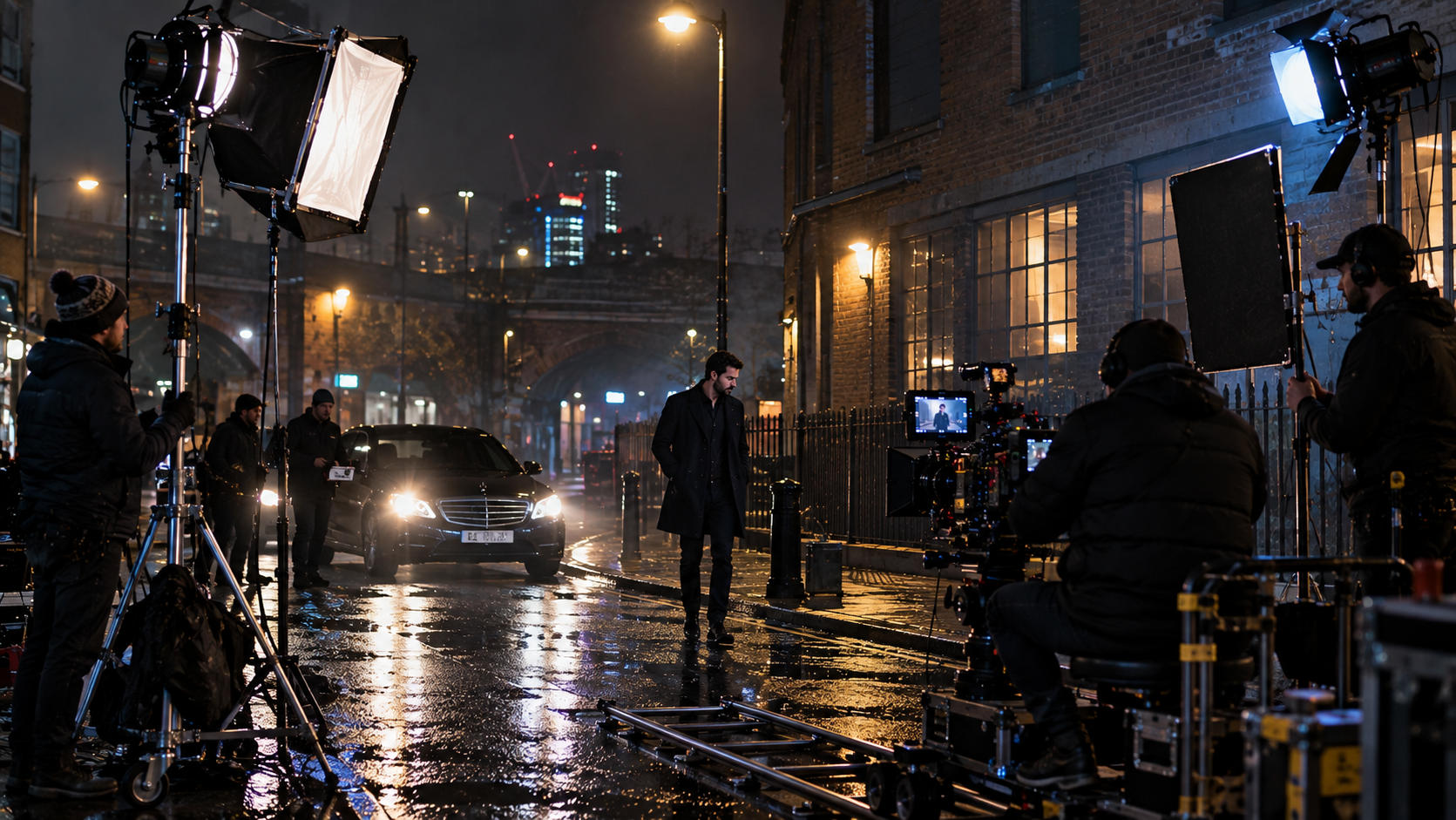
Night exteriors are particularly challenging because the crew has less control over the environment than in a studio. Streetlights, traffic, neighbouring buildings, weather and reflective surfaces can all affect the image.
A location survey should identify the available light, safe equipment positions, access routes, potential obstructions and the power arrangements needed for the shoot.
The crew should also establish whether the location requires permission, traffic management or additional safety measures. Filming near roads and public spaces demands careful planning to protect cast, crew and members of the public.
For a street scene, begin by deciding which existing sources should remain visible. A streetlamp can establish a pool of light, while a shop window may add warmth and depth. Additional fixtures can strengthen selected areas where the camera needs more detail.
Avoid illuminating every part of the location equally. Keeping some areas darker can help the audience understand where the light is coming from and give the image a stronger sense of depth.
When the scene involves a large exterior or a long camera move, the lighting plan should consider the distance between fixtures and the subject, the required output, weather conditions and the time needed to reposition equipment.
For suitable daylight-balanced or high-output applications, investigate the HMI lighting equipment category. An HMI source may suit some setups, but its output, ballast and power requirements must be checked against the actual production conditions.
5. Make Interior Night Scenes Feel Natural
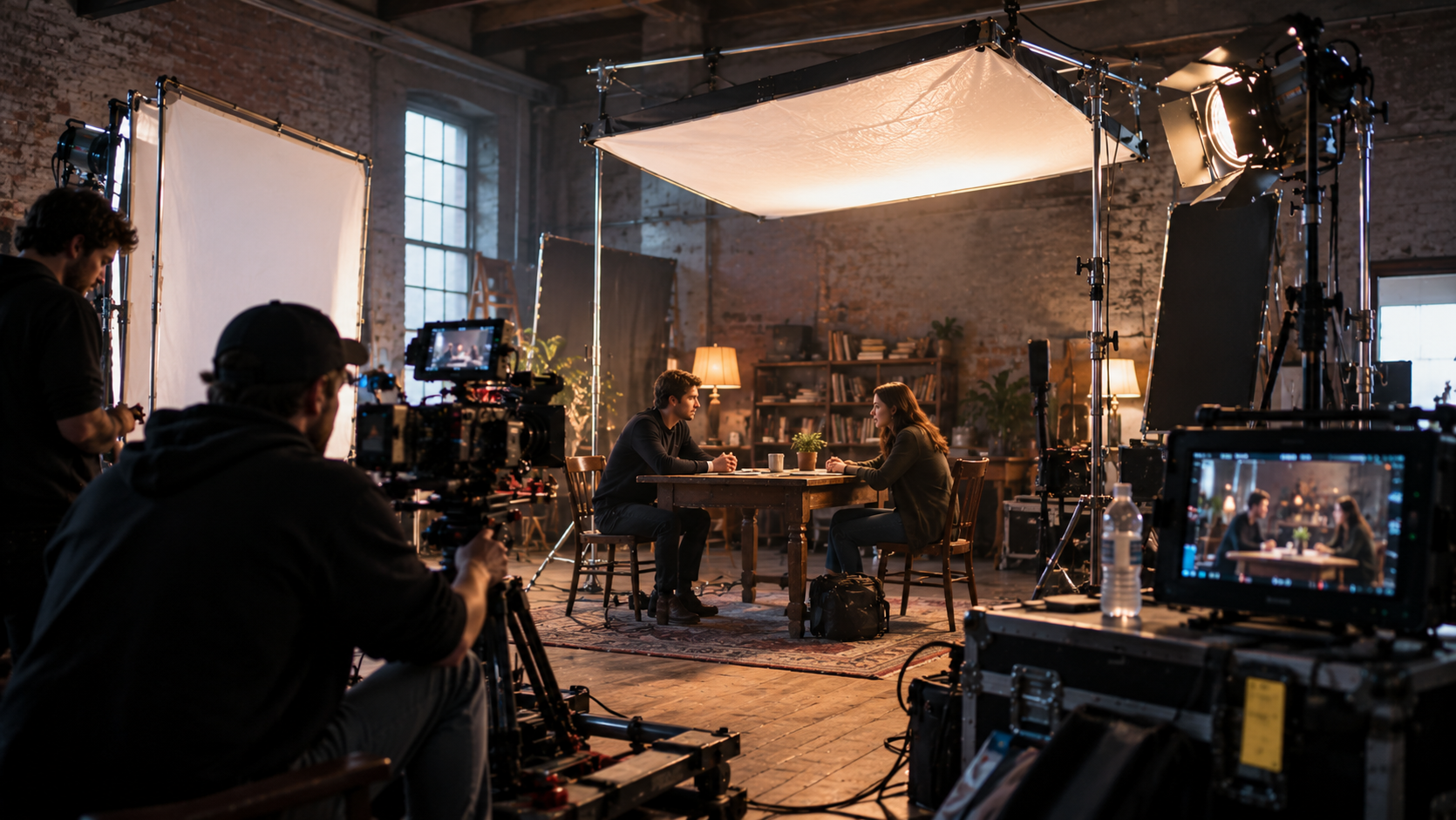
Interior night scenes often rely on a combination of practical lamps and controlled film lighting.
A bedroom scene may use a bedside lamp as the visible source, while additional light subtly shapes the actor's face. A kitchen scene may use an overhead fixture as motivation, with carefully controlled fill to preserve facial detail. A hallway can use pools of light to guide the viewer's eye through the space.
The goal is to preserve the relationship between the apparent source and the illumination it creates.
Start by placing practical sources where they make sense within the set. Then assess whether the camera can record the scene at the intended exposure. If the practical source is too weak, a controlled fixture may be needed to support it.
Flags and negative fill can prevent unwanted light from spreading across the room. Diffusion and bounce can soften a source where harsh shadows are distracting.
For a more dramatic scene, the cinematographer might allow one side of the face to fall into shadow. The choice should reflect the character and the scene rather than follow a fixed lighting formula.
Consider the walls and furniture as well. Light-coloured surfaces can reflect illumination throughout a room, while darker finishes may absorb more light. These differences can change the contrast even when the fixture positions remain the same.
6. Understand Exposure and Low-Light Camera Requirements
Lighting decisions must work with the camera. A scene that appears bright enough on a monitor may still produce noisy shadows or lose detail when recorded.
Before the shoot, the camera team should test the intended frame rate, shutter settings, aperture, ISO or gain, recording format and colour profile. These choices affect the amount of light required and the final image quality.
Increasing ISO or gain can make the image brighter, but it does not replace the need to understand noise, highlight retention and the camera's actual performance. Similarly, opening the aperture may help exposure but can affect depth of field and focus requirements.
The lighting and camera departments should agree on the intended exposure approach before the final setup.
Record test footage and inspect the shadows, skin tones and highlights on a suitable display. Check whether practical sources are clipping and whether the darker parts of the scene retain the intended amount of detail.
A night scene does not need to be bright everywhere. It needs to preserve the details that matter to the story and the chosen visual style.
7. Day-for-Night Filming: An Alternative to Night Shoots
Some productions film during the day and create the appearance of night through lighting, exposure, composition and colour grading. This technique is commonly called day-for-night.
It can be useful when actual night filming is impractical, but it requires careful planning. Daylight is usually much stronger than typical night illumination, and the sky, windows and distant backgrounds can reveal that a scene was recorded during the day.
A successful day-for-night setup considers:
- The direction and intensity of sunlight.
- The brightness of the sky and background.
- The amount of detail visible in shadow areas.
- The colour relationship between the subject and the environment.
- The planned colour-grading approach.
- Whether the location contains obvious daylight cues.
The crew may use flags, controlled exposure and selective lighting to reduce unwanted brightness. The camera and post-production teams should test the intended approach before committing to the full shoot.
Day-for-night is not a universal substitute for night filming. It works best when the location, camera angle and creative treatment support the illusion.
8. Plan Equipment, Grip and Power for Night Shoots
Night filming can involve multiple fixtures, stands, modifiers, cables and distribution equipment. A complete equipment list helps the crew understand what needs to be transported, installed and checked before filming.
Include the main fixtures, the accessories required to shape them, suitable stands and grip equipment, cable lengths, power requirements and any contingency items considered necessary.
Explore the grip equipment available for sale when planning stands and light-control tools. If a location requires suitable portable power, review the generators and batteries category and verify that the available equipment matches the actual load and operating conditions.
Electrical safety is especially important outdoors. Distribution and connections should be planned by competent personnel. Equipment must be suitable for the environment, and cables should be routed to minimise trip hazards and avoid damage.
Generators must be placed outdoors in a properly ventilated position away from doors, windows and air intakes because exhaust contains dangerous carbon monoxide. Do not place a generator inside a building, vehicle or enclosed space.
For equipment planning, the Light as Air rental listings and sale listings can help production teams compare potential options before confirming the final package.
9. Build a Night-Shoot Workflow That Saves Time
Night shoots can be tiring, and unnecessary delays may affect the production schedule. A repeatable workflow helps the team complete setups efficiently while maintaining safety.
Before the shoot, conduct a location survey and identify where fixtures can be positioned. Prepare a lighting diagram for each major setup and record any restrictions on access or power.
At the location, establish the primary source first. Then add background or separation lighting only where it supports the shot. Check the image through the camera before making extensive adjustments.
For scenes with several camera angles, record the key positions and take reference photographs. This makes it easier to restore the look after moving equipment.
The team should also allow time for equipment checks, safe rigging, weather changes and controlled wrap procedures. Fixtures may need time to cool before they can be handled or packed, depending on the equipment.
Clear communication between the cinematographer, gaffer, camera team and location crew helps prevent last-minute changes that compromise either the image or the schedule.
10. Where UK Production Teams Can Explore Night-Shoot Lighting Equipment
The right lighting package depends on the scene, the location and the intended visual result. Production teams should compare equipment based on output, colour control, power requirements, accessories and suitability for the working environment.
Light as Air provides a starting point for exploring film and television lighting equipment, with categories and listings for rental and purchase.
Before choosing a fixture, confirm the exact model, condition, availability, accessories and operating requirements. A particular light should be selected because it supports the shot, not simply because it is powerful or familiar.
For a specialist high-output source, review the ARRI M90 HMI rental listing and check whether the unit is appropriate for the scene. For broader company information, visit the Light as Air website.
Frequently Asked Questions
How do you light a night scene in a film?
Start by identifying the apparent sources of light, the subject's exposure requirements and the intended mood. Use controlled fixtures, practical lights and light-control accessories to create believable illumination while preserving shadow and depth.
What equipment is useful for night exterior filming?
Depending on the location, productions may need LED fixtures, HMI sources, stands, grip equipment, diffusion, flags, cables and suitable power distribution. The final list should reflect the scene and the equipment's actual specifications.
How can filmmakers create a moonlight effect?
A controlled source positioned to suggest light from the sky can create a moonlight effect. Source direction, diffusion, colour, background exposure and the camera's white balance all influence the final appearance.
What is day-for-night filming?
Day-for-night is a filmmaking technique that uses footage recorded during the day to create the appearance of night. It typically requires careful exposure, composition, control of daylight cues and a planned colour-grading approach.
Is LED or HMI lighting better for night shoots?
Neither is universally better. LEDs can provide flexible output and colour control, while HMI fixtures can provide substantial daylight-balanced output in suitable setups. Selection depends on the scene, location, power requirements and production needs.
How can a production make night scenes look realistic?
Use motivated lighting, maintain a clear relationship between visible sources and illumination, control the background and preserve intentional shadow. Review test footage rather than judging the setup only by eye.
Where can UK film crews find lighting equipment?
Crews can explore Light as Air's equipment categories, rental listings and sale listings, then confirm the availability and suitability of specific items.
Conclusion
Night shoot lighting requires a balance between creative intention, camera requirements, equipment selection and practical location planning. The most effective setup is not necessarily the brightest one; it is the one that directs attention, preserves the intended atmosphere and supports the story.
By planning motivated sources, testing exposure, controlling unwanted light and preparing a suitable equipment package, UK production teams can create night scenes with depth and visual consistency.
Good preparation also helps the crew manage power, access, safety and setup time. These practical decisions allow the cinematographer to concentrate on the image while the production team keeps the shoot organised.